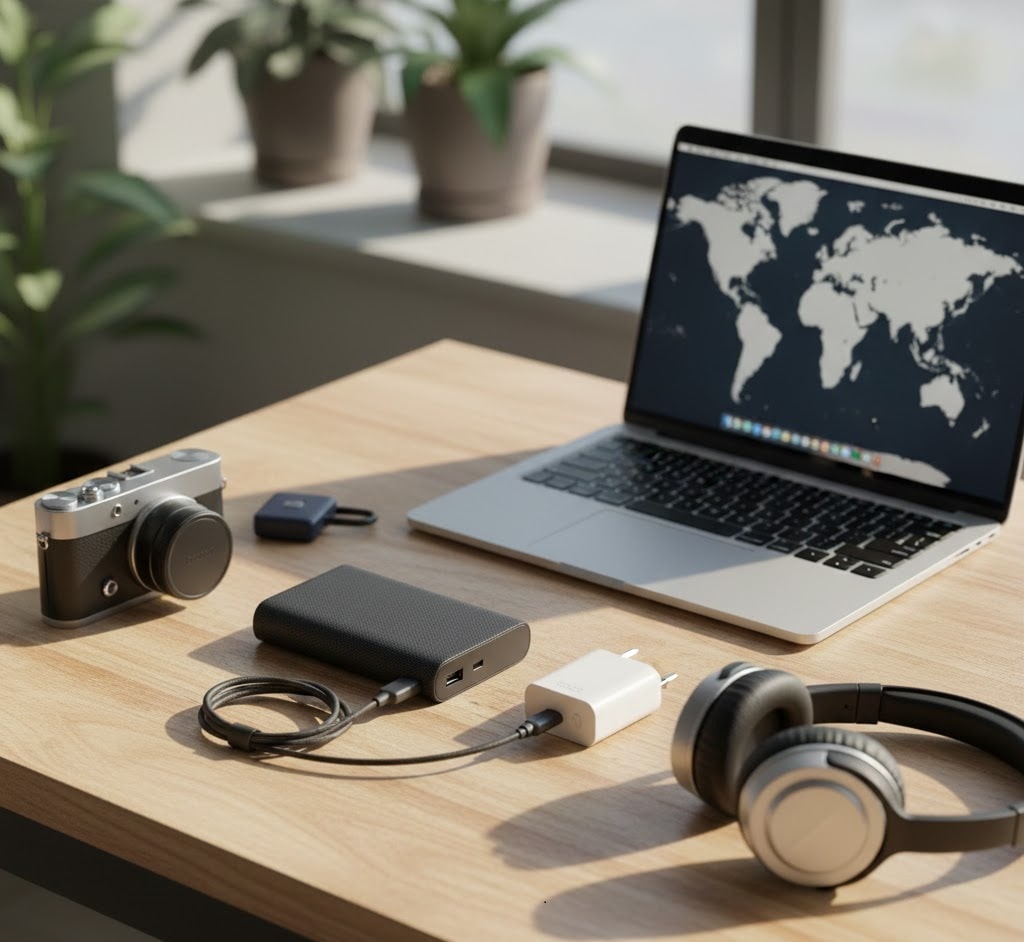

Job hunting no longer requires a home office or a fixed address. Applications, interviews, and even offer negotiations increasingly happen through lightweight, browser-based tools that run on almost any device with an internet connection. Pew Research Center has tracked this shift for years, and its research found that a large majority of recent job seekers have used the internet to research and apply for positions, with mobile and cloud-based tools playing a growing role in that process. For someone applying to jobs from a train, a co-working space, or a hotel lobby in another country, this matters. The whole process, from finding a listing to submitting a polished application, can now happen without a permanent desk.
That shift is especially useful for the growing number of people who search for work while traveling. Instead of carrying a full office setup, most of what a traveling applicant needs fits into a backpack and a handful of apps. One of the more time-consuming parts of the process, adjusting a resume for each specific job posting, has also moved online. Research summarized by career platform Jobscan points to tailoring as a meaningful factor in getting noticed, since applicant tracking systems weigh how closely a resume mirrors the language in a job description. Rather than rewriting a resume from scratch in a hotel room, many job seekers now paste a job description into this tool and get a tailored draft back in minutes, no software installation required.
Here is what a practical, travel-friendly digital toolkit for remote job hunting tends to include.
A Compact Laptop or Tablet
The foundation of any mobile job search is a device that is light enough to carry all day but capable enough to handle video calls, document editing, and long browser sessions. A compact laptop with a decent battery life is usually the more reliable choice for filling out lengthy applications or joining video interviews, since typing and multitasking are still easier on a physical keyboard. A tablet paired with a foldable keyboard can work as a lighter alternative for shorter trips, since it packs down small while still allowing comfortable typing during long application sessions. Reports from freeCodeCamp, which tracks tools used by digital nomads, note that most remote workers now build their setups around portability first, since laptops and bags are more likely to be lost, damaged, or left behind during frequent travel.
Portable Wi-Fi or an International eSIM
Unreliable internet is one of the fastest ways to derail a job search on the road. A dropped video interview or a resume that fails to upload at the wrong moment can cost an opportunity. Many travelers now rely on portable Wi-Fi hotspots or an international eSIM that activates before they even land in a new country, rather than hunting for a local SIM card after arrival. Guides on nomad tools, including coverage from freeCodeCamp, describe this as one of the more significant shifts in recent years, since it removes a common source of downtime during travel days when connectivity matters most.
Cloud Storage for Documents
Keeping resumes, cover letters, certificates, and reference letters in cloud storage rather than only on a local device protects against the practical risks of travel, including device theft, hardware failure, or a laptop left in a taxi. Platforms such as Google Drive, Dropbox, and Microsoft OneDrive allow a job seeker to access and edit documents from any browser, which matters when applying from a borrowed computer or a phone. Data from workplace research group Signeasy indicates that backup and file recovery tools have become a standard part of the remote worker’s kit, precisely because losing access to key documents can stall an active job search for days.
A Resume-Editing App Built for Speed
Tailoring a resume for each application is one of the more tedious but effective habits in modern job hunting. Findings referenced by resume research site Resumly indicate that a meaningful share of candidates skip this step entirely, which can lower their odds of getting an interview. For someone traveling, sitting down to manually rewrite bullet points before every application is rarely realistic. A resume-editing app that accepts a pasted job description and suggests keyword and phrasing adjustments lets a traveler make those changes from an airport lounge in a few minutes rather than an hour. It also helps address a separate problem noted by career platform Zimyo, which found that resumes formatted incorrectly can fail to parse properly in applicant tracking systems before a keyword match is even evaluated.
Looking Ahead
As remote hiring becomes more common and applicant tracking systems continue to shape how resumes are screened, the tools that support a traveling job search are likely to keep converging around the browser. A compact device, dependable connectivity, cloud-based document storage, and fast resume tailoring cover most of what someone needs to apply for jobs seriously while moving between cities or countries. None of these tools require a fixed workspace, which is precisely why they have become standard for people building a career while staying mobile.
 Gaming is no longer limited to bedrooms, gaming cafés, or home offices. Today, many players continue gaming while traveling for work, school, vacations, or business trips. Portable devices, stronger internet connections, and cloud-based services have made gaming more flexible than before. Players can now stay connected to ranked matches and gaming communities from almost anywhere.

 Technology has changed the way people travel. It has made planning easier, navigation faster, and communication smoother. It has also shaped how travelers share their stories online. Today, travel and social media go hand in hand. Many travelers document their experiences through posts, videos, and real-time updates. Because of this, online visibility becomes important. One issue that travelers often face is the possibility of being shadowbanned. This can affect how many people see their content. Understanding how and checking for shadowban